


If you have ever read an article online, watched a tutorial, or followed a creator’s journey, you have probably visited a blog without even realizing it. Blogs are everywhere on the internet — and they have been quietly powering how we learn, shop, and share ideas for more than two decades. Yet many beginners still ask a surprisingly simple question: what is a blog, exactly?
A blog is a website (or a section of a website) that is regularly updated with written content called “posts” or “articles.” Posts are usually displayed in reverse chronological order, with the newest content appearing first. That is the technical definition — but a blog is really much more than that. It is a publishing platform, a business asset, a personal diary, and for millions of people, a source of income.
In this guide, you will learn exactly what a blog is, how blogs differ from regular websites, the most common types of blogs, and how blogging actually works behind the scenes in 2026.
What Is a Blog? The Simple Definition
A blog is an online journal or informational website where an individual, group, or company publishes content on a regular basis. The word “blog” is a shortened form of “weblog” — a log of the web. Wikipedia’s article on blogs notes that a blog’s basic unit is a “post,” with posts typically presented in reverse chronological order, and that blogging may be carried out by individuals, commercial enterprises, or organizations with widely varying content.
Every blog shares a few core characteristics:
- Posts, not pages: Content is published as dated entries called posts, which appear newest-first on the blog’s homepage.
- Regular updates: A blog is alive. New content is added on a schedule — weekly, several times a week, or daily.
- Reader interaction: Visitors can usually leave comments, share posts on social media, and subscribe for updates.
- A focused topic (usually): The most successful blogs cover a niche — a specific subject area like personal finance, travel, cooking, or technology.
Blog vs. Website: What Is the Difference?
This is one of the most common points of confusion for beginners. Every blog is a website, but not every website is a blog.
A traditional website is mostly static. Think of a business site with a homepage, an About page, a Services page, and a Contact page. The content rarely changes, and pages have no dates or chronological order.
A blog is dynamic. Its heart is a stream of dated posts that keep growing over time. Many modern sites combine both: a static homepage and service pages plus a blog section where fresh articles are published regularly. That combination is powerful for businesses, because every new post is another chance to be found on Google.
Here is a quick comparison:
- Content: Websites have static pages; blogs have dated, regularly updated posts.
- Frequency: Website content changes rarely; blog content is published on a schedule.
- Interaction: Blogs invite comments and social sharing; traditional sites are usually one-way.
- SEO benefit: Every blog post is a new page Google can rank — which is why businesses blog.
A Brief History of Blogging
The first blogs appeared in the late 1990s as online diaries. The term “weblog” was coined by Jorn Barger in 1997, and the shortened form “blog” was popularized in 1999 when Evan Williams (later a co-founder of Twitter) used it for his Blogger platform. Early blogs were personal journals where people wrote about their daily lives.
In the 2000s, blogging exploded. Platforms like WordPress (launched in 2003) made it possible for anyone to publish without knowing any code. News organizations, companies, and eventually social media creators all adopted the format. By 2022, estimates suggested there were more than 600 million public blogs on the internet — and the number has kept growing since.
Today, blogging has matured into a professional industry. Successful blogs are carefully run media businesses with editorial calendars, SEO strategies, and multiple income streams.
The Main Types of Blogs
Blogs come in many flavors. Understanding the main types helps you decide what kind of blog you might want to read — or start.
Personal Blogs
The original form of blogging. A personal blog is an online diary where an individual writes about their life, thoughts, and experiences. Most personal blogs have small audiences, but a few have grown into major brands with book deals and advertising sponsorships.
Niche Blogs
These focus on one specific topic and serve a well-defined audience. Examples include food blogs, travel blogs, personal finance blogs, parenting blogs, and tech blogs. Niche blogs tend to perform best in search engines because every post reinforces the site’s expertise on one subject.
Business and Corporate Blogs
Companies publish blogs to attract customers, answer questions, and build trust. A software company might publish tutorials; a clothing brand might publish style guides. Business blogs are one of the most effective marketing channels available, and nearly every major brand runs one.
News and Magazine Blogs
Multi-author blogs that cover current events, politics, entertainment, or industry news. They update frequently — sometimes several times a day — and function much like online newspapers.
Multimedia Blogs
Not all blogs are text-heavy. Some focus on other formats:
- Photoblogs — centered on photography
- Vlogs — video blogs, often hosted on YouTube alongside a written site
- Podcast blogs — audio episodes with written show notes
- Microblogs — very short posts, like threads on social platforms
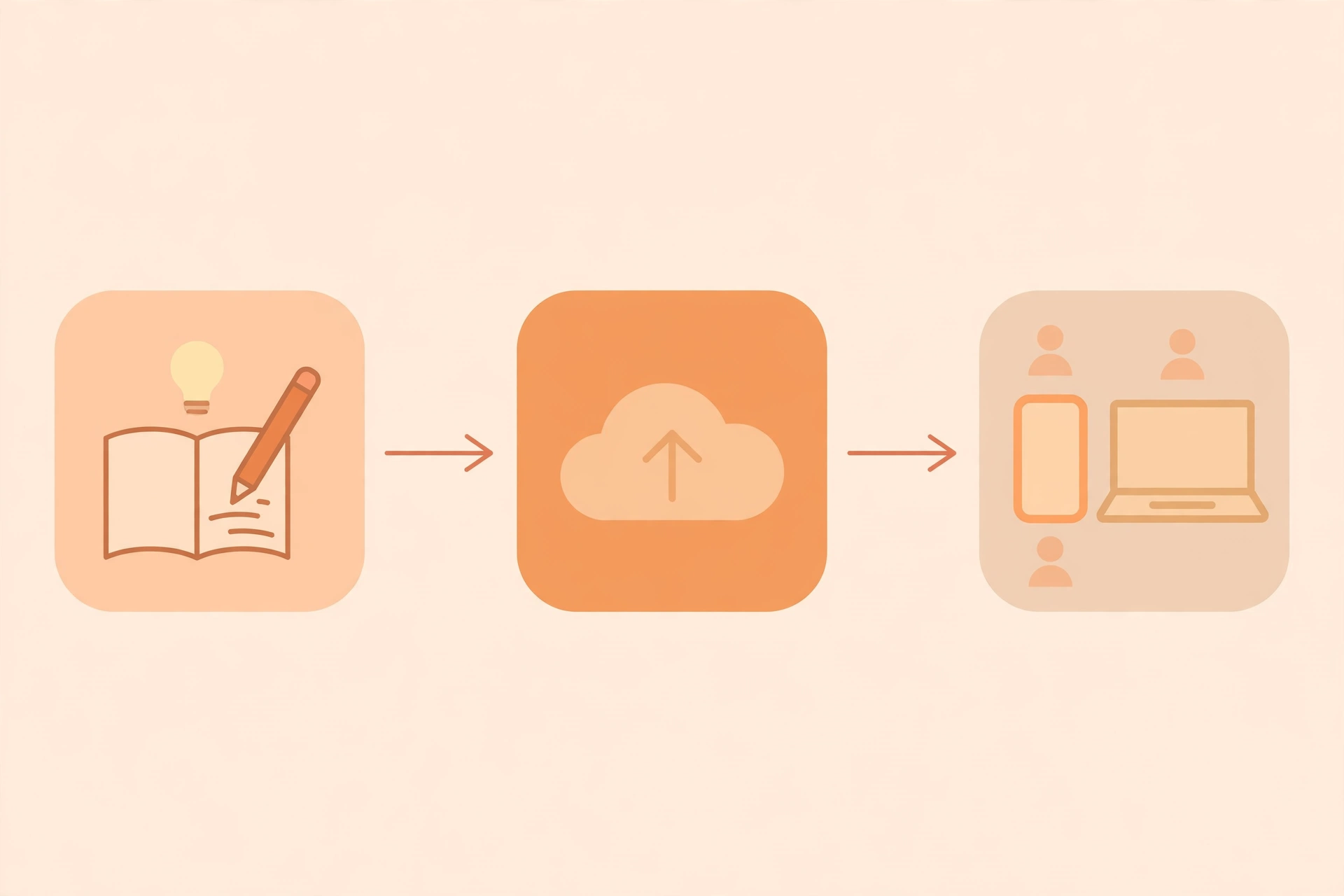
How Does a Blog Actually Work?
Understanding the mechanics of a blog takes away a lot of the mystery. Here is the process from idea to published post:
- Choose a topic and audience. The blogger decides what the blog is about and who it is for.
- Write a post. Using a platform like WordPress, the blogger writes and formats an article — adding headings, images, and links.
- Optimize for search. Most bloggers research keywords (the terms people type into Google) and shape their posts so search engines can find and rank them.
- Publish. The post goes live and appears at the top of the blog’s homepage.
- Promote. The blogger shares the post on social media, email newsletters, and online communities.
- Earn. Traffic can be monetized through ads, affiliate links, sponsored posts, or selling products and services.
Comments and social shares feed back into this loop: engagement signals to Google that the content is valuable, which can improve rankings, which brings more readers.
Why Do People Start Blogs?
People blog for many different reasons, and the motivations often overlap:
- To make money: Advertising, affiliate marketing, digital products, and services can turn a blog into a full-time income.
- To build a business: A blog attracts potential customers and establishes authority in an industry.
- To share expertise: Teachers, doctors, chefs, and hobbyists use blogs to teach what they know.
- To build an audience: A blog is an asset you own — unlike a social media following, nobody can take it away with an algorithm change.
- For fun: Many bloggers simply enjoy writing and connecting with like-minded readers.
Frequently Asked Questions
Is a blog the same as a website?
Not exactly. A blog is a type of website focused on regularly updated, dated posts shown newest-first. A regular website usually has static pages that rarely change. Many sites combine both.
Who reads blogs in 2026?
Hundreds of millions of people. Readers find blogs through Google searches, social media, email newsletters, and recommendations. As long as people search for answers online, blogs will have an audience.
Can anyone start a blog?
Yes. You need a domain name, web hosting, and a platform like WordPress — and you can have a blog live in under an hour. No coding is required with modern tools.
Do blogs still make money?
Absolutely. Blogs monetize through display ads, affiliate commissions, sponsored content, and digital products. It takes time and consistent publishing, but blogging remains a viable online business model in 2026.
What is the difference between a blog and a vlog?
A blog is primarily text-based content published on a website. A vlog (video blog) is primarily video-based content, usually hosted on platforms like YouTube. Many creators run both side by side.
Final Thoughts
A blog is simply a website built around regularly published content — but that simple format has changed how the world shares knowledge. Whether it is a personal diary, a niche hobby site, or a business publishing helpful articles, the mechanics are the same: write useful posts, publish them consistently, and let readers find you.
If this guide sparked an idea, the next step is learning how blogs actually look in the wild. Browse our collection of blog examples to see real formats, niches, and styles — and when you are ready to build your own, you will already know exactly what a blog should be.


[…] for your own project. If you are brand new to the concept, start with our beginner’s guide on what is a blog first, then come back here for […]